
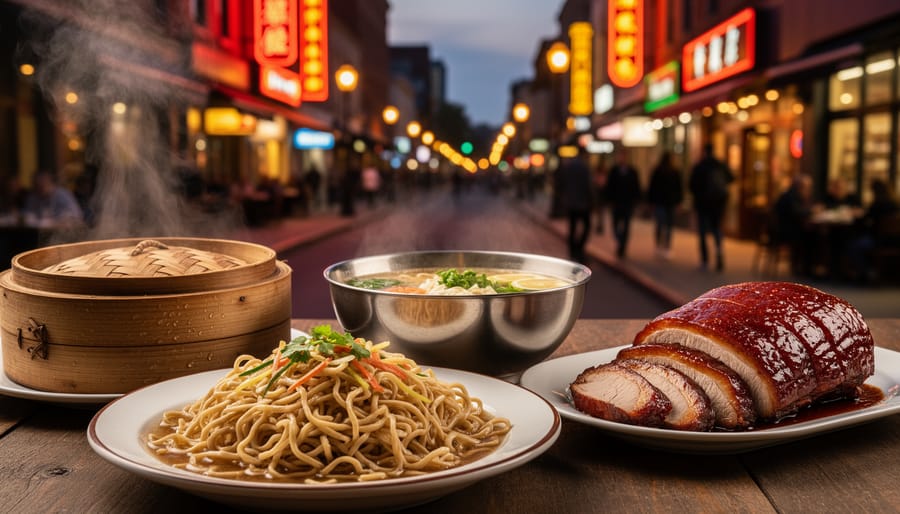
Richmond stands as North America’s most authentic Asian food destination outside of Asia itself, home to over 200,000 residents of Chinese descent and a dining landscape where regional Chinese cuisines, Japanese ramen bars, Taiwanese night market vendors, Korean barbecue houses, and Hong Kong-style cafes cluster so densely that entire neighborhoods function as culinary microcosms of their ancestral cities.
The city’s geographic concentration creates something rare: you can taste hand-pulled Lanzhou noodles, Hokkaido milk bread, and Shanghainese soup dumplings within a ten-minute drive, prepared by chefs who learned their craft in those exact regions. This isn’t fusion or adaptation. Walk into the right Richmond restaurant and you’ll find menus printed only in Chinese, Cantonese chatter filling every table, and dishes that would earn nods of approval in Guangzhou or Chengdu.
What sets Richmond apart isn’t just the variety, but the legitimacy. Grandmothers from Taipei run breakfast joints serving the same dan bing they perfected decades ago. Former Hong Kong dim sum masters fold har gow with the same precision that earned them Michelin attention overseas. The ingredients matter too: Asian supermarkets stock produce flown in from Asia weekly, seafood tanks brim with live geoduck and Dungeness crab, and specialty importers bring in the exact rice, soy sauce, and spice blends that make regional cooking taste like home.
The dining scene clusters around three main areas, each with its own personality. Alexandra Road hums with upscale seafood palaces. No. 3 Road between Cambie and Alderbridge serves as the historical heart, packed with beloved institutions. And newer developments around Capstan Village showcase contemporary pan-Asian concepts. Together, they form a gastronomic ecosystem that rewards both planned pilgrimages and spontaneous exploration.
Why Richmond Has Become Vancouver’s Asian Food Capital
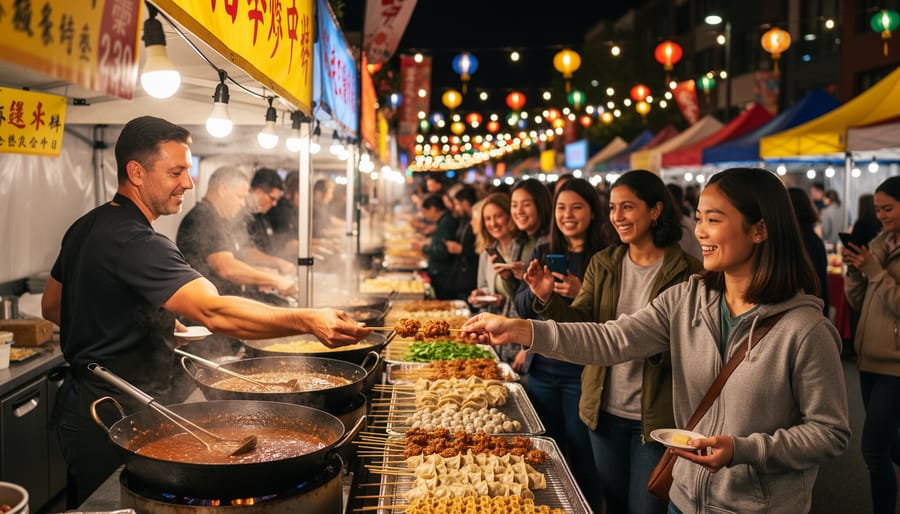
Richmond’s transformation into Vancouver’s premier Asian food destination didn’t happen overnight, it’s the result of decades of immigration patterns, entrepreneurial spirit, and a community deeply invested in preserving authentic culinary traditions. The city’s demographic shift accelerated in the 1980s and 1990s when immigrants from Hong Kong, Taiwan, mainland China, Japan, and Korea established roots here, bringing with them generations of family recipes and regional cooking techniques that couldn’t be found anywhere else in Metro Vancouver.
Unlike the gradual evolution of Vancouver’s food history Richmond’s Asian culinary scene emerged with remarkable authenticity from the start. First-generation chefs and food artisans opened restaurants not to adapt their cuisine for Western palates, but to serve their own communities, people who demanded the real thing. This meant hand-pulled noodles made the traditional way, dim sum carts staffed by Cantonese-speaking servers, and hot pot broths simmered for hours using recipes passed down through families.
Geography played a role too. Richmond’s proximity to YVR means daily shipments of specialty ingredients arrive fresh from Asia, allowing restaurants to source everything from live geoduck to specific varieties of rice vinegar that would be impossible to find elsewhere. The airport also brings a constant flow of international visitors who know authentic Asian food when they taste it, keeping standards high and pushing restaurant owners to stay true to their roots rather than compromise for broader appeal.
Richmond’s Distinct Asian Culinary Regions
The Golden Village: Hong Kong-Style Dining and Dim Sum Palaces
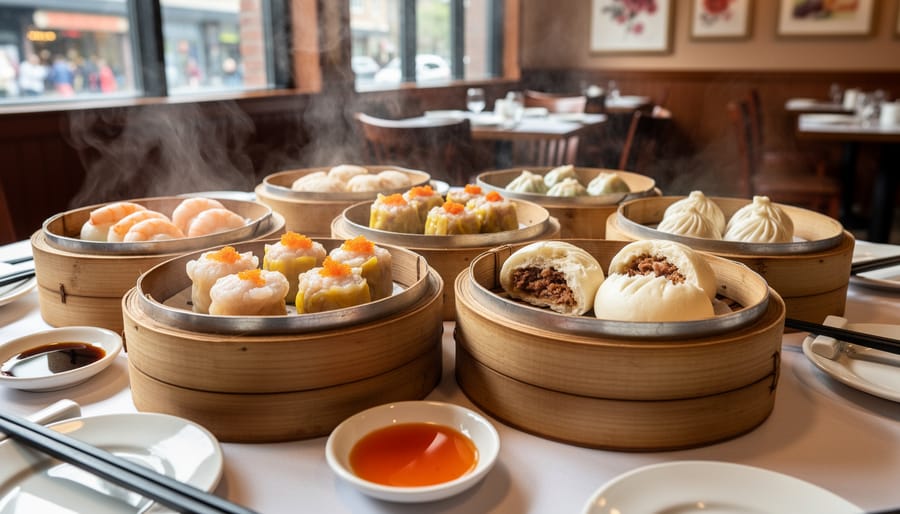
Along Alexandra Road and the streets radiating from it, Hong Kong has been recreated in vivid detail. This is the heart of Richmond’s Chinese food scene, where neon signs glow in Cantonese characters above sprawling dining rooms that hum with the clatter of carts and the sizzle of woks. The Golden Village earned its name from the prosperity its restaurants represent, multi-story palaces dedicated to the Cantonese art of yum cha and live seafood preparation.
Step inside a dim sum house here on a Sunday morning and you’ll find yourself navigating a sea of round tables, three generations gathered over bamboo steamers. Har gow arrive translucent and plump, their shrimp filling sweet and snappy. Siu mai glisten with pork and shrimp under a dot of tobiko. Carts roll past bearing baked char siu bao, their tops cracked golden, and cheung fun draped over Chinese donuts or stuffed with barbecued pork.
The seafood restaurants operate like theater. Tanks line the entryways, geoduck, Dungeness crab, spot prawns, and garoupa swimming in illuminated water. You point, the kitchen weighs, and twenty minutes later the same creature returns transformed: steamed with ginger and scallion, stir-fried with garlic, or presented in a silky egg-white sauce.
Hong Kong-style cafés punctuate the blocks, serving milk tea so strong it coats your teeth, pineapple buns split and filled with cold butter, and macaroni soup that somehow tastes like comfort in a bowl.
Aberdeen Centre and the Taiwanese Food Revolution
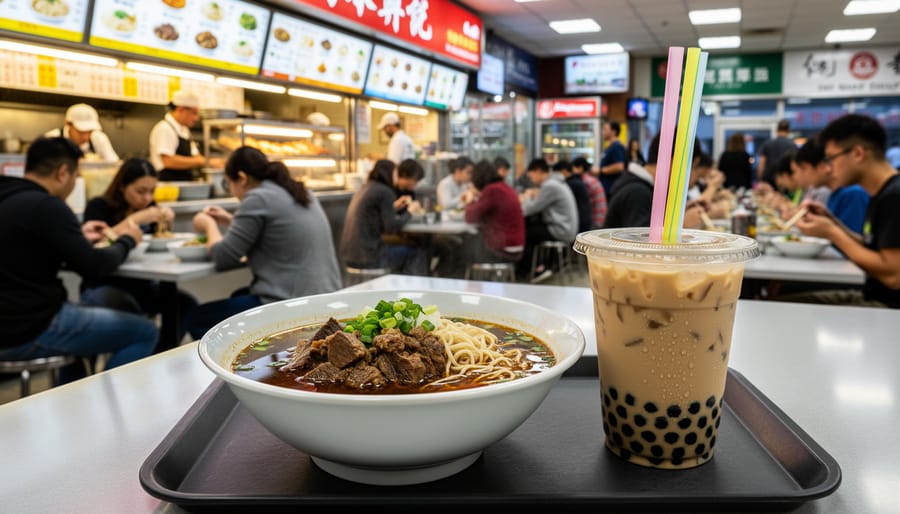
Aberdeen Centre stands as Richmond’s beating heart of Taiwanese food culture, where the food court concept transforms into something far more dynamic than mere convenience dining. Step inside this multi-level shopping complex, and you’re immediately immersed in the controlled chaos of a Taipei night market, steam rising from soup dumplings, the clatter of woks against gas flames, and the sweet aroma of freshly brewed bubble tea mingling with the savory pull of braised beef noodles.
The food court here rewrote Vancouver’s understanding of casual Asian dining. Vendors who trained in Taiwan’s legendary night markets now serve their regional specialties from compact stalls, each one a portal to a different facet of Taiwanese gastronomy. You’ll find xiao long bao crafted with the precision of a Michelin-starred kitchen, their delicate skins containing molten broth that demands careful technique to eat without burning your tongue. Beef noodle soup arrives in deep bowls, the broth dark and complex from hours of simmering star anise, ginger, and tender shank meat that falls apart at the touch of chopsticks.
This is where bubble tea culture first took root in Metro Vancouver, with multiple vendors still hand-shaking their drinks and cooking tapioca pearls fresh throughout the day. Late afternoon transforms the space into a gathering spot, students hunched over textbooks with pearl milk tea, families sharing platters of popcorn chicken and scallion pancakes, elderly regulars claiming their corner tables for afternoon tea and gossip. The energy never quite settles, creating an atmosphere where eating becomes inseparable from community.
No. 3 Road: From Sichuan Fire to Japanese Precision
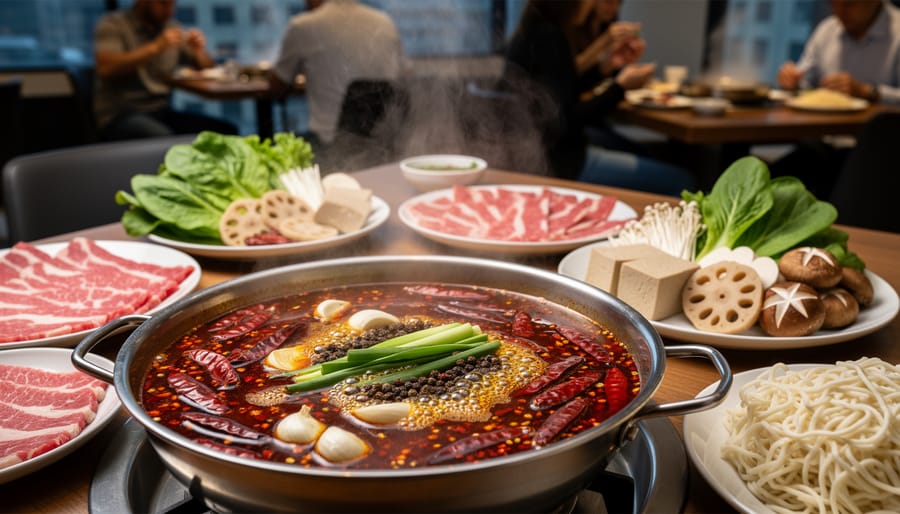
No. 3 Road pulses with the kind of culinary diversity that turns a simple dinner decision into a delightful dilemma. Within a ten-minute walk, you’ll encounter Sichuan restaurants where the air shimmers with mala heat, followed by serene Japanese noodle houses where chefs tend bubbling tonkotsu broth with reverent focus.
The Sichuan establishments here don’t dilute their fire for timid palates. Expect authentic dan dan noodles with their numbing pepper bite, twice-cooked pork glistening with chili oil, and hot pot broths that build complexity with each minute of simmering. These kitchens import Sichuan peppercorns and preserved vegetables directly from the source, creating flavors that transport you straight to Chengdu’s bustling food streets.
Step into one of the corridor’s Japanese ramen shops and the contrast is striking, not in quality, but in philosophy. Here, precision replaces boldness. Watch as chefs slice chashu with surgical accuracy, time soft-boiled eggs to the second, and adjust seasoning with the concentration of artisans. The izakayas scattered along this stretch offer another dimension entirely: yakitori grilled over binchotan charcoal, sake poured into handmade cups, and small plates designed for lingering conversations.
What makes No. 3 Road remarkable isn’t just the variety, it’s the authenticity of each tradition standing shoulder-to-shoulder. The Shanghainese restaurant serving soup dumplings maintains its own identity beside the Cantonese seafood house, which coexists peacefully with the Korean BBQ joint. This corridor proves that Richmond’s Asian food scene isn’t a melting pot, it’s a vibrant collection of distinct voices, each speaking clearly in its own dialect.
Steveston Village: Coastal Japanese and Seafood Fusion
Steveston’s weathered wooden docks and cannery buildings tell the story of Richmond’s Japanese fishing community, whose legacy lives on in some of the region’s most distinctive coastal dining. This historic village handles fresh seafood with the precision and reverence you’d expect from generations of maritime tradition, boats unload their catch steps from restaurants where chefs transform ocean-to-table into an art form.
The sushi bars here operate differently than landlocked counterparts. Chefs build relationships with local fishermen, selecting daily catches that arrive within hours rather than days. Wild sockeye salmon appears on menus during its brief summer run, spot prawns make their spring debut, and sablefish, called black cod in many establishments, gets the miso marinade treatment that showcases its buttery richness. You taste the difference in texture and flavor intensity that comes from fish still firm with sea-cold freshness.
Steveston’s Japanese restaurants blend coastal Canadian ingredients with traditional techniques in ways that feel organic rather than forced. Dungeness crab finds its way into hand rolls. Local halibut becomes sashimi that melts cleanly on your tongue. Small izakayas serve grilled whole sardines alongside sake, channeling the working-class fishing traditions that built this neighborhood.
The village’s seafood markets let you witness this connection firsthand, coolers stocked with whole fish still bright-eyed, live Dungeness crabs scuttling in tanks, and staff who can tell you where each species was caught. It’s coastal Japanese food culture without the Pacific crossing, rooted in the same waters that shaped Steveston’s identity.
What to Eat: Signature Dishes You Can Only Find in Richmond
Richmond’s culinary artisans have brought recipes and techniques from their home regions that remain rare elsewhere in North America. The signature dishes here tell stories of tradition, family, and meticulous craft.
Walk into a hand-pulled noodle shop and watch dough transform into silken strands through rhythmic stretching and folding, a mesmerizing dance that ends with noodles hitting boiling water within seconds of being formed. The result has a springy bite and wheaty fragrance impossible to replicate with machine-made pasta. Cantonese roast meat shops display glistening rows of barbecued pork, mahogany-lacquered ducks, and whole roasted chickens in their windows, each one glazed to crackling perfection and carved to order over rice still steaming from the cooker.
The depth of Richmond’s Asian gastronomic diversity reveals itself in dishes that demand specialized knowledge and ingredients:
– Hand-pulled noodles stretched to order, their chewy texture and irregular width catching rich beef broth and chili oil
– Hong Kong-style siu mei (roasted meats) with crackling skin and juicy meat, carved tableside and served over rice with master sauce
– Authentic Sichuan hot pot broths simmered with dozens of spices, creating layered heat that builds rather than punishes
– Japanese omakase featuring daily catches from local waters and Japan, each piece shaped by decades of training
– Korean banchan spreads with eight to twelve house-fermented side dishes accompanying grilled meats, each a small masterpiece
– Southeast Asian laksa with hand-pounded spice pastes, coconut broth, and fresh rice noodles made that morning
– Regional Chinese specialties like Shanghainese soup dumplings, Taiwanese beef noodle soup, and Dongbei-style dumplings rarely found outside their home provinces
The xiao long bao at Taiwanese restaurants arrive in steamer baskets, each dumpling a delicate pouch holding pork and a spoonful of scalding broth that releases in a burst of ginger and sesame when you bite through the translucent wrapper. Korean BBQ restaurants bring premium short ribs to your table with house-made ssamjang, crisp lettuce leaves, and dozens of banchan that change with the seasons and the chef’s mood.
These dishes represent generations of technique and regional pride, brought to Richmond by families who refuse to compromise on authenticity.
How to Experience Richmond’s Asian Food Scene Like a Local
Start with dim sum between 10:30 and noon, when tables fill with Cantonese-speaking families sharing steaming carts of har gow and char siu bao. You’ll hear the clatter of tea cups, the squeak of trolley wheels, and servers calling out dish names, this is when the rhythm feels most alive. For late-night Taiwanese snacks, head to Aberdeen Centre’s food court after 8 PM, when the bubble tea lines grow long and groups gather over stinky tofu and popcorn chicken.
At traditional dim sum houses, don’t hesitate to point at what looks good on passing carts or ask your neighbor what they’re eating. Richmond diners are generous with recommendations, and servers appreciate curiosity over hesitation. When ordering from Chinese menus without English translations, look for tables with dishes you’d like to try and snap a photo to show your server, or simply ask for house specialties.
Etiquette is simpler than you think. Communal dining is the norm, so sharing plates and reaching across the table feels natural here. Pour tea for others before filling your own cup, and tap two fingers on the table as a quiet thank-you when someone refills yours. At hot pot restaurants, don’t dump everything into the broth at once, add items gradually and fish them out as they cook.
Hidden gems live in the back corners of shopping plazas, upstairs from bubble tea shops, and inside food courts where lineups snake past empty stalls. The best finds rarely have English signage out front. Watch where the locals queue, especially families with young children and older generations dining together, they know which xiao long bao wrappers are hand-rolled that morning and which bakeries make fresh pineapple buns twice daily.
Richmond’s food culture thrives on connection, much like a community kitchen where strangers become neighbors over shared meals. Strike up conversations with shop owners about their regional specialties, ask the couple next to you what they ordered, and let curiosity guide you past the familiar. The neighborhood rewards those who wander with intention and eat with openness.
Planning Your Richmond Culinary Adventure
Getting to Richmond from downtown Vancouver is easier than you might think. The Canada Line takes you from the city center to Richmond in about 25 minutes, with stations positioned near major dining corridors. Exit at Richmond-Brighouse for Aberdeen Centre and the No. 3 Road restaurants, or Lansdowne for the Golden Village area. If you’re driving, take Highway 99 south and follow signs for the neighborhood you want to explore first.
First-time visitors should start their culinary journey at Aberdeen Centre’s food court during lunch hours. The indoor setting feels less intimidating than navigating unfamiliar streets, and you can watch how locals order before committing. From there, walk north along No. 3 Road to experience the density of options within a few blocks. Spring brings fresh spot prawns to Steveston’s seafood restaurants, while autumn means crab season and heartier hot pot broths. Winter is perfect for steaming bowls of noodle soup, and summer calls for cold noodles and lighter Taiwanese snacks.
A progressive food tour works beautifully in Richmond because neighborhoods sit close together. Plan three to four stops over an afternoon: dim sum brunch in Golden Village, Taiwanese bubble tea and snacks at Aberdeen, a Japanese ramen break on No. 3 Road, then finish with Korean BBQ for dinner. This approach lets you sample multiple regional cuisines without feeling rushed.
For deeper immersion into Richmond’s artisan food culture, Vancouver food tours led by local guides open doors to hidden gems you’d never find independently. These experiences connect you with chefs, introduce you to ordering etiquette at different establishment types, and reveal the stories behind family-run businesses. If you’re planning an extended culinary exploration, incorporating Richmond into a 4-day food tour of Metro Vancouver gives you time to return to favorites and dig deeper into specific regional cuisines.
Do I need to speak Cantonese or Mandarin to order?
Most Richmond restaurants have English menus and staff who speak English, especially in main dining corridors. Pointing at photos or watching what other tables order works perfectly well.
Can I experience Richmond’s food scene on a budget?
Absolutely. Food court stalls, bakeries, and casual noodle shops offer authentic meals for under $15, while dim sum lunch provides exceptional value with small plates you can share.
What’s the best time to visit Richmond for food?
Lunch hours capture the dim sum experience at its peak, while late evenings bring out the Taiwanese night market energy at Aberdeen Centre. Weekends get crowded but offer the fullest atmosphere.
The key to a successful Richmond culinary adventure is leaving room for spontaneity. When you spot a lineup of locals at an unmarked bakery or catch the aroma of roasting duck through an open kitchen door, that’s your invitation to discover something extraordinary.
Richmond’s Asian food scene isn’t just a destination, it’s a living, breathing celebration of culinary traditions brought to life by passionate artisans and chefs who’ve made this neighborhood their home. From the steam rising off morning dim sum carts to the late-night sizzle of Taiwanese street food, every meal here tells a story of heritage, craftsmanship, and community.
What makes Richmond truly special is its authenticity. You’re not experiencing watered-down versions of regional cuisines; you’re tasting dishes prepared the way they’ve been made for generations, using techniques passed down through families and ingredients sourced with care. The grandmother hand-folding dumplings in a Golden Village kitchen, the ramen chef who spent years perfecting his broth, the baker pulling fresh pineapple buns from the oven at dawn, these are the people who give Richmond its soul.
Whether you wander the neighborhoods on your own, following your nose and curiosity, or join a guided culinary tour that unlocks hidden gems and insider stories, Richmond rewards those who come hungry and open to discovery. Each visit reveals new layers, new flavors, new connections to the diverse cultures that have shaped Metro Vancouver’s most vibrant culinary landscape.
So grab your chopsticks, bring your appetite, and dive into Richmond’s gastronomic tapestry. Your next unforgettable meal is waiting.