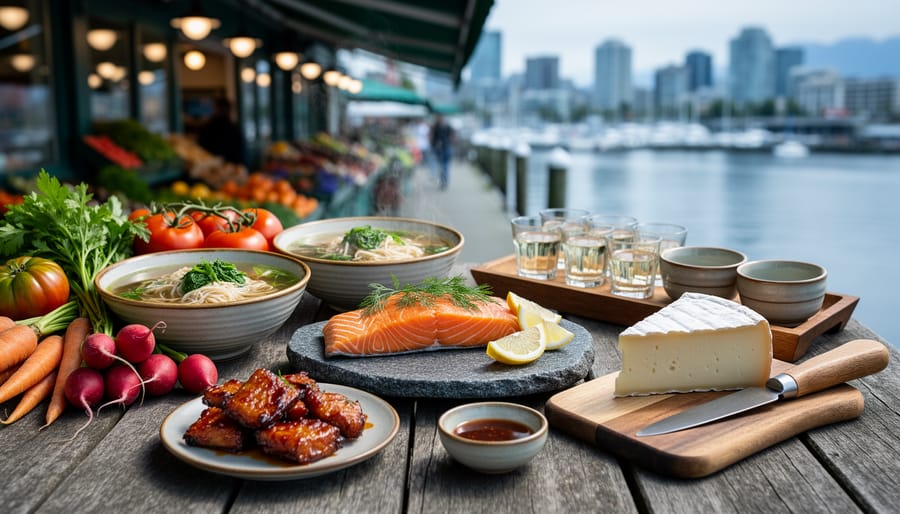
Four days in Vancouver gives you enough time to explore the city’s most exciting culinary neighborhoods, from the aromatic soup stalls of Chinatown to the ocean-to-table restaurants of Granville Island. This itinerary guides you through a day-by-day journey across neighborhoods that define Vancouver’s diverse food culture, balancing guided food tour experiences with independent tastings at local markets, bakeries, and hidden-gem eateries. You’ll discover why Vancouver’s geographic position between ocean and mountains, combined with its multicultural communities, creates one of North America’s most dynamic food scenes.
The structure is simple: each day focuses on a distinct neighborhood or culinary theme, with morning market visits, afternoon tastings, and evening dining experiences that showcase both established local artisans and emerging food entrepreneurs. You’ll taste wild Pacific salmon prepared six different ways, sample Chinese barbecue perfected over generations, meet cheese makers working with Fraser Valley dairy, and discover why Vancouver’s Japanese, Indian, and Vietnamese communities have shaped the city’s food identity as much as its French-trained chefs.
This guide provides specific timing recommendations, transportation tips between neighborhoods, and the insider knowledge that turns a good food trip into an unforgettable one. Whether you’re visiting during summer’s berry season or winter’s Dungeness crab months, Vancouver rewards curious eaters willing to venture beyond downtown’s obvious choices into the communities where locals actually eat.
Why Vancouver Deserves Four Days of Culinary Exploration
Vancouver’s food scene operates at an entirely different scale than most North American cities. You can walk from a third-generation Chinese BBQ master in Chinatown to an Italian espresso bar on Commercial Drive, then finish the evening at a Punjabi sweet shop on Main Street, all within a few kilometers. This density of authentic, community-rooted food culture doesn’t happen by accident. It’s the result of Vancouver’s history as a Pacific port where waves of immigration have layered culinary traditions on top of Indigenous food knowledge going back thousands of years.
Four days gives you enough time to move beyond the surface-level tourist spots and actually taste what makes this city different. You’ll discover why local chefs source halibut caught that morning from Granville Island vendors, how Coast Salish smoking techniques influence contemporary seafood restaurants, and why Vancouver’s Chinese dim sum rivals anything in Hong Kong. Each neighborhood functions as its own culinary ecosystem with distinct specialties, and rushing through in a day or two means missing the connections between place, people, and food.
Several factors make Vancouver’s culinary landscape worth this dedicated time:
- Direct access to Pacific seafood, salmon, halibut, spot prawns, and Dungeness crab landed hours before they reach your plate
- The largest Asian population outside Asia, bringing authentic Cantonese, Japanese, Korean, and South Asian food traditions
- Indigenous culinary revival showcasing traditional ingredients like bannock, venison, and foraged coastal plants
- Thriving craft beer, coffee roasting, and distilling scenes with dozens of small-batch producers
- Neighborhood specialization where each area cultivates its own food identity and artisan community
Guided food tours unlock access to spots you’d never find on your own, the family-run dumpling shop with no English signage, the bakery that’s been making Portuguese custard tarts since 1986, the cheese maker who’ll explain why Fraser Valley dairy tastes different. These connections to actual food makers, not just restaurants, reveal how Vancouver’s culinary community actually works. You’re tasting the city through the people who’ve built it, meal by meal, for generations.
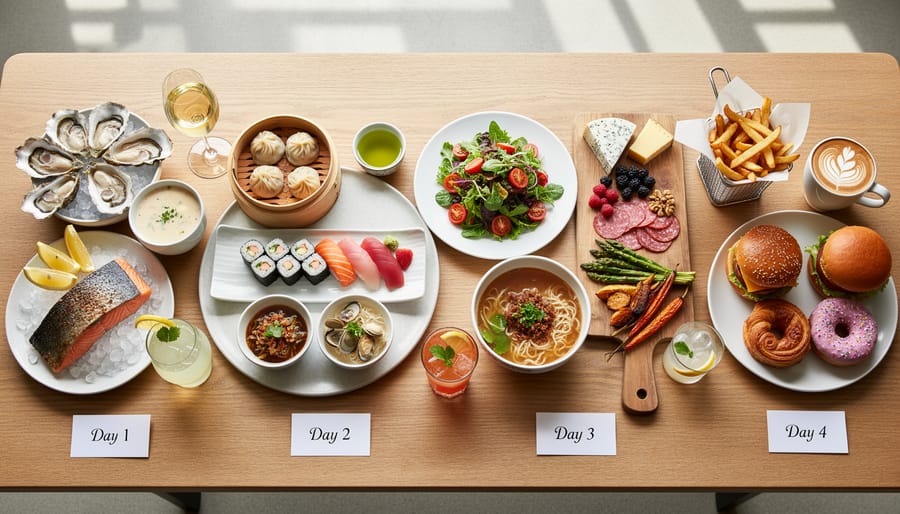
Your 4-Day Vancouver Food Tour Itinerary
1. Day One: Gastown and Chinatown, Historic Flavors and Cultural Roots
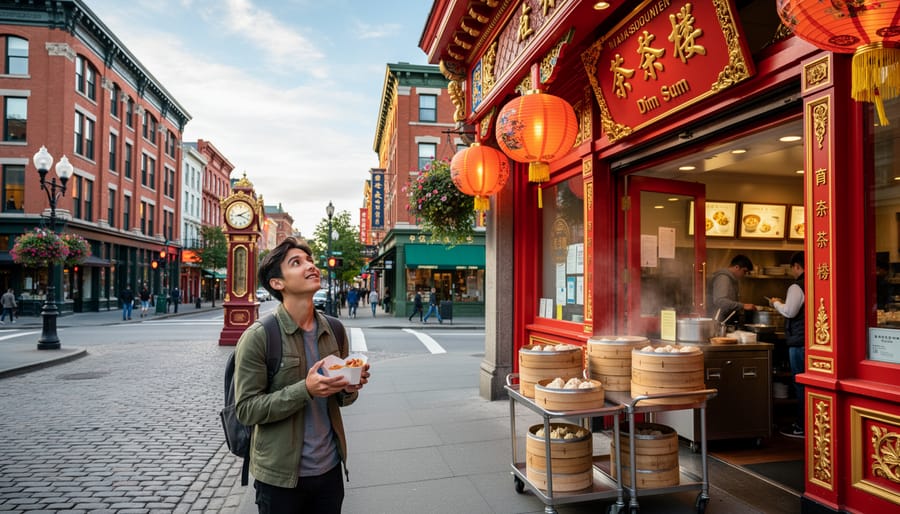
Start your Vancouver culinary journey where the city began. Day one takes you through Gastown and Chinatown, two neighborhoods where century-old traditions meet contemporary innovation, and where every storefront tells a story through food.
Begin your morning in Gastown, wandering cobblestone streets that smell of freshly roasted coffee beans and warm bread. The neighborhood’s artisan coffee roasters open early, and you’ll want to arrive when bakers are pulling their first loaves from the oven. Stop at a third-generation Italian bakery where the owner still hand-shapes focaccia using his grandmother’s recipe, or watch a coffee roaster explain how they source beans directly from small farms in Guatemala. The charm here isn’t just the food itself but the people behind it, artisans who chose Gastown specifically to be part of this historic fabric.
Mid-morning, move through specialty food shops tucked into heritage buildings. A cheese monger might offer you samples of British Columbia farmstead varieties while explaining the terroir of Fraser Valley dairy farms. Next door, a chocolatier tempers single-origin cacao on marble slabs, creating truffles infused with local ingredients like sea buckthorn and Douglas fir tips. These aren’t Instagram-bait tourist traps; they’re serious food artisans who happen to work in one of Vancouver’s most photogenic neighborhoods.
After lunch, cross into Chinatown, where the energy shifts completely. This is North America’s third-largest Chinatown, and it pulses with activity. Join the locals queuing at dim sum houses where Cantonese grandmothers have been hand-folding har gow for decades. The carts still roll between tables at traditional spots, though newer establishments offer modern twists on classics.
Explore herbal tea shops where practitioners blend dried ingredients according to traditional Chinese medicine principles, and BBQ specialists where whole ducks hang in windows, their skin lacquered to amber perfection. Time your visit right and you can experience the neighborhood’s night market energy, vendors setting up stalls, the sizzle of street food on hot griddles, and the multilingual chatter of a community gathering to eat together. This is Vancouver at its most authentically diverse.
2. Day Two: Granville Island and Kitsilano, Markets and Coastal Cuisine
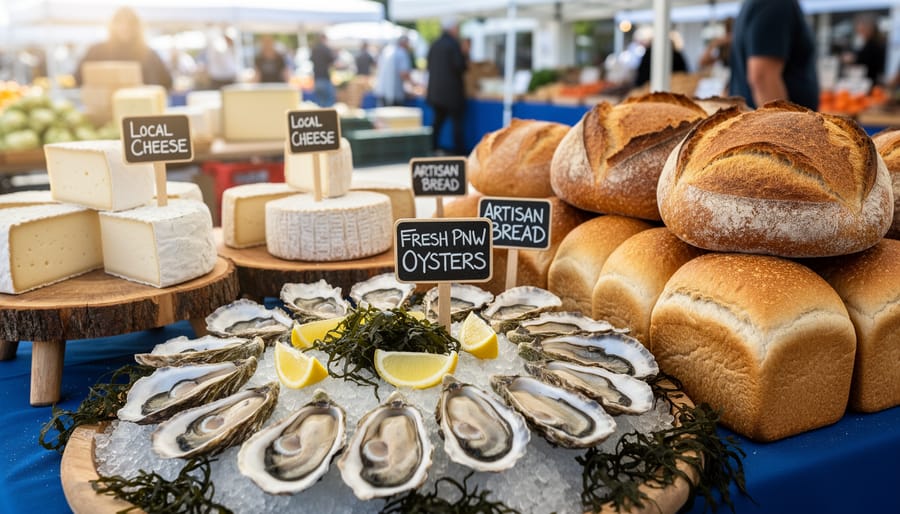
Start your morning at Granville Island Public Market, where the buzz of vendors and the salt air from False Creek signal you’ve arrived at Vancouver’s most beloved food destination. This is where locals shop for dinner and tourists discover the true breadth of Pacific Northwest bounty. Hit the market early, around 9 AM, when fishmongers are arranging wild salmon, spot prawns, and Dungeness crab on beds of ice, and the bakery counters are still warm with morning loaves.
Work your way through the permanent vendors methodically. Stop at Stuart’s Baked Goods for their legendary granola and watch bakers pull sourdough from the ovens. At The Oyster Bar, order a half-dozen freshly shucked oysters paired with mignonette, they’ll tell you which inlet each one came from. The cheese vendors will offer samples of aged cheddars from Salt Spring Island and creamy triple-crèmes from Fraser Valley dairies. Don’t skip the prepared food stalls: try smoked salmon chowder from Stock Market or a breakfast sandwich from Siegel’s Bagels. The craft brewery tour with Granville Island Brewing gives context to how this former industrial site transformed into a culinary hub.
After exploring the market’s artisan shops and waterfront patios, catch the short Aquabus to Kitsilano. This beachside neighborhood shifts the energy from market bustle to laid-back coastal living. Fourth Avenue is lined with farm-to-table restaurants sourcing from Fraser Valley farms and Vancouver Island growers. Lunch at Fable Kitchen showcases seasonal vegetables and house-cured meats with transparent sourcing listed right on the menu.
Spend the afternoon walking Kitsilano Beach, then explore West 4th’s health-conscious cafés and juice bars that reflect Vancouver’s wellness culture. Try pressed juices with kale from nearby farms or acai bowls topped with local berries. For dinner, book a table at one of Kits’ seafood-forward restaurants where halibut, sablefish, and lingcod arrive daily from Pacific fisheries. The proximity to the ocean isn’t just scenery here, it shapes every meal.
3. Day Three: Commercial Drive and Main Street, Multicultural Eats and Artisan Culture
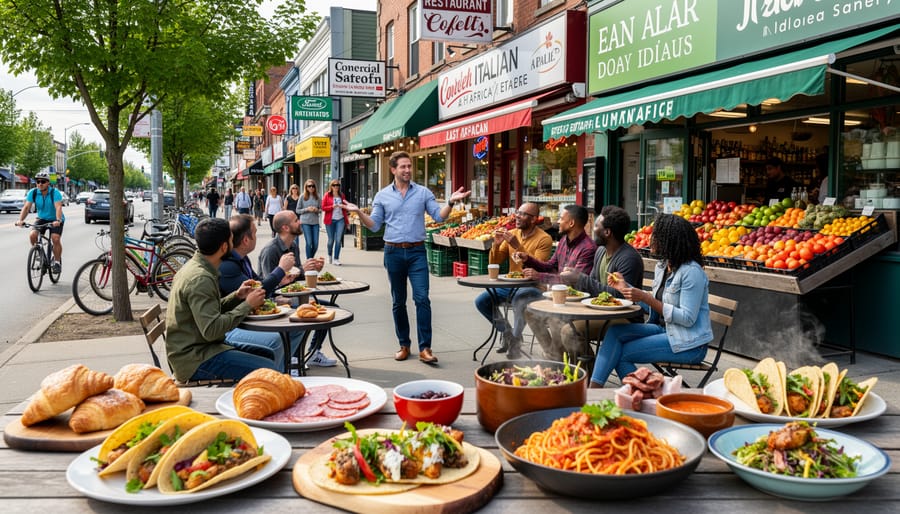
Day three takes you into Vancouver’s most vibrant, community-driven neighborhoods where culinary creativity thrives alongside genuine multicultural heritage. Commercial Drive and Main Street represent the city’s artistic soul and its commitment to independent, artisan-focused food culture.
Start your morning on Commercial Drive, affectionately called “The Drive” by locals. This neighborhood pulses with an authenticity that sets it apart from Vancouver’s more polished districts. Begin at one of the Italian bakeries that have anchored this street for decades, the kind of place where nonnas still work the counters and the biscotti recipe hasn’t changed in forty years. The scent of fresh focaccia and espresso brewing from vintage machines sets the tone for a neighborhood that values tradition as much as innovation.
As you walk the Drive, you’ll encounter Latin American bakeries serving proper empanadas and pan dulce, Ethiopian restaurants where injera is made fresh daily, and Vietnamese bánh mì shops that have perfected their craft over generations. This isn’t a theme park version of multiculturalism, these are family businesses serving their communities, and you’re welcomed as a guest at their table. The craft coffee culture here runs deep, with roasters who know their farmers by name and baristas who treat their espresso pulls like art.
After lunch, shift south to Main Street, where Vancouver’s independent food artisans have created something entirely their own. This neighborhood attracts chefs who left high-end kitchens to pursue their creative visions in intimate spaces. You’ll find restaurants that change their menus based on what arrived at the farm that morning, craft cocktail bars experimenting with house-made bitters and local botanicals, and small-batch producers making everything from fermented hot sauce to bean-to-bar chocolate.
Main Street’s food scene reflects genuine craftsmanship rather than corporate polish. Tattoo-sleeved chefs emerge from tiny kitchens to explain their dishes, and you might find yourself sitting elbow-to-elbow with the baker whose sourdough you’re eating. These neighborhoods reward curiosity, duck into the shop that catches your eye, strike up conversations with makers and owners, and let the day unfold organically rather than rushing between scheduled stops.
4. Day Four: Yaletown and West End, Fine Dining and Global Fusion
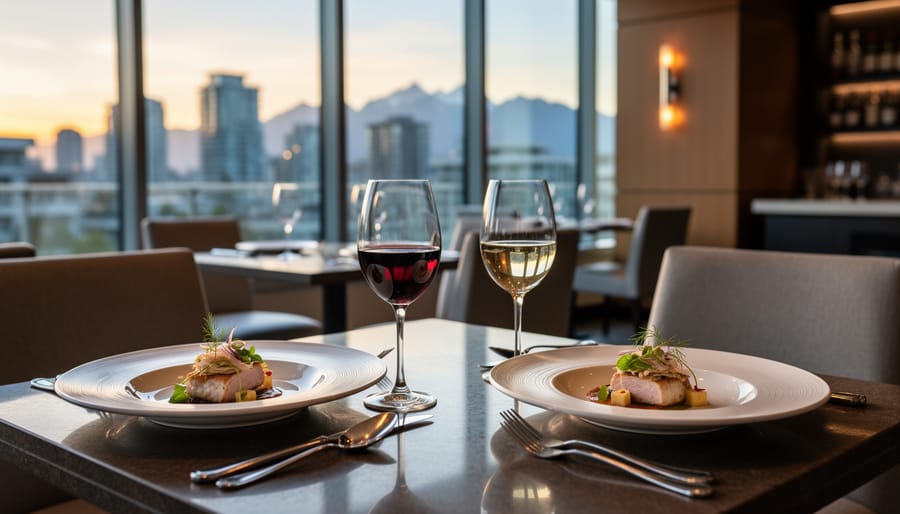
Your final day elevates the culinary journey with Vancouver’s most refined dining experiences, starting in the polished warehouse district of Yaletown before exploring the remarkably diverse West End. This combination showcases how Vancouver balances sophisticated innovation with genuine multicultural authenticity.
Begin your morning in Yaletown, where century-old brick warehouses now house some of Vancouver’s most creative restaurants. The neighborhood’s wine bars open early for tastings featuring British Columbia’s Okanagan Valley vintages paired with locally-sourced charcuterie. Contemporary cafés serve precision-crafted espresso alongside pastries that blend French technique with Japanese aesthetics. Walk the cobblestone streets to discover chef-driven concepts that change menus weekly based on what Fraser Valley farms deliver that morning. The intimate scale means you’ll often meet the chefs themselves, discussing their approach to Pacific Northwest ingredients with global techniques.
By afternoon, head to the West End, where Vancouver’s international character becomes deliciously tangible. Within a six-block radius, you’ll find family-run Persian restaurants serving fragrant tahdig, Filipino eateries with perfect lumpia, Greek tavernas making their own feta, and Vietnamese pho houses where three generations work the kitchen. Robson Street anchors this diversity with everything from Korean barbecue to authentic Italian gelato, but the real discoveries happen on the quieter residential streets where neighborhood regulars queue outside unassuming storefronts.
Denman Street’s casual seafood spots offer the perfect transition to evening, many with patios where you can watch the sun drop toward the Pacific. Time your reservation for a waterfront restaurant around golden hour, the combination of sunset views over English Bay and plates of wild salmon or spot prawns creates the ideal finale to four days of culinary exploration.
This final day demonstrates what makes Vancouver special: the seamless integration of world-class refinement and genuine cultural expression, often within the same neighborhood. You’re not choosing between elevated dining or authentic ethnic food; you’re experiencing both as natural parts of Vancouver’s culinary identity.
Practical Information for Your Vancouver Food Tours
Getting around Vancouver’s neighborhoods is straightforward, which makes four days of food exploration entirely manageable. The city’s public transit system (TransLink) connects all major food tour areas, with single-zone fares covering most downtown and nearby neighborhoods. A DayPass provides unlimited travel and pays for itself after three trips. Between Gastown, Chinatown, and the West End, walking is often your best option, these areas sit within a 20-minute walk of each other. Commercial Drive and Main Street are accessible via the SkyTrain, while Granville Island requires a short bus ride or pleasant walk from downtown. Bike share programs offer another flexible option, particularly for reaching Kitsilano’s beachside spots.
Spring through early fall (April to October) delivers the best food tour weather, with farmers markets in full swing and patios open for lingering over local craft beer. Summer brings peak produce and the longest daylight hours, though September often surprises visitors with warm, clear days and fewer crowds. Winter tours have their own charm, cozy noodle shops, steaming dim sum, and holiday market treats, though expect rain and shorter days.
| Consideration | Details | Tips |
|---|---|---|
| Transportation | TransLink DayPass, walking, bike share | Download transit app; most neighborhoods are walkable clusters |
| Best Timing | April-October for weather; September for crowds | Book weekend tours early; weekday afternoons often less busy |
| Budget | $150-200 per person daily (tours + independent meals) | Guided tours typically $75-120; leave room for market splurges |
| Booking | Reserve guided tours 1-2 weeks ahead | Mix one guided tour per day with self-guided exploration |
Booking a what to expect from professional guides brings insider access to spots you’d never find alone, plus stories that connect food to Vancouver food history and culture. Most three-hour tours include five to seven tastings and cost between $75-120. Balance one guided tour daily with self-directed exploration, after your Gastown food tour you’ll feel confident navigating other neighborhoods independently. Budget roughly $150-200 per person daily when combining a guided tour with independent meals and market purchases.
Nearly all Vancouver food tours accommodate dietary restrictions when you mention them during booking. The city’s food scene naturally includes abundant vegetarian, vegan, and gluten-free options. If you’re exploring Chinese food in Richmond or other specialized areas, communicate your needs directly, local vendors genuinely want to share their food with everyone.
Local Tips for Making the Most of Your Food Tour Experience
Start your food tour mornings with just coffee, not a full breakfast. Four days of back-to-back tastings means serious calories, and the biggest mistake visitors make is arriving too full to appreciate each stop. That said, bring water and wear comfortable walking shoes, you’ll cover 8-15 km daily depending on the neighborhood.
The real magic happens when you chat with the people behind the counter. Ask the third-generation dim sum chef about wrapper techniques, inquire what the Italian baker recommends today, or let the fishmonger at Granville Island explain how to spot fresh spot prawns. These conversations unlock Vancouver’s food heritage in ways no guidebook can capture.
Build buffer time between scheduled tour stops for spontaneous discoveries. If you spot locals queuing at an unmarked bakery or notice a pop-up farmers market, investigate. The best finds often lack signage or English menus. Don’t hesitate to point at what someone else is eating and ask for “one of those.”
Respect the rhythm of small establishments. Family-run spots in Chinatown and Commercial Drive often have specific prep times when they can’t accommodate walk-ins, and some close between lunch and dinner service. If a vendor is clearly slammed, come back in 20 minutes rather than hovering impatiently.
Seasonal timing matters more than most visitors realize. Spot prawn season (May-June), salmon runs (summer through fall), and Dungeness crab (winter) dramatically change what locals prioritize. Ask your food tour guide what’s at peak freshness this week, then adjust your independent exploration accordingly.
Frequently Asked Questions
How much should I budget daily for food tours in Vancouver?
Plan for $75-150 per person per day, depending on whether you join guided tours (typically $80-120 per tour) or explore independently. This covers tastings, meals, and some drinks, though fine dining experiences in Yaletown will push toward the higher end.
Are guided food tours worth it compared to exploring on my own?
Guided tours provide insider access to spots you’d likely miss, context about neighborhood history and culinary traditions, and curated tastings that showcase the best of each area. Self-guided exploration works well on day four once you’ve learned the city’s layout and discovered your preferences through earlier guided experiences.
What’s the best season for Vancouver food tours?
Late spring through early fall (May to October) offers the warmest weather and peak seasonal ingredients at Granville Island Market. That said, Vancouver’s mild winters make food tours enjoyable year-round, and you’ll find fewer crowds from November through March.
Can food tours accommodate dietary restrictions?
Most guided tours accommodate vegetarian, gluten-free, and other common dietary needs with advance notice. Vancouver’s diverse food scene means you’ll find plenty of options regardless of restrictions, from plant-based cafés on Main Street to allergen-conscious bakeries in Gastown.
The beauty of structuring your four days around food tours is that you’re already hitting Vancouver’s main neighborhoods and attractions. Gastown and Chinatown blend culinary discoveries with heritage architecture, while Granville Island combines market browsing with waterfront views. You can easily weave in Stanley Park seawall walks between Kitsilano and West End food stops, or explore craft breweries after your Commercial Drive tour wraps up. The city’s compact layout means food experiences and sightseeing naturally overlap rather than compete for your time.
Leave a Reply