Vancouver’s history is written in the stories of its people, and nowhere is that narrative more visceral than in the evolution of its food. From the Coast Salish Nations who first harvested these shores thousands of years ago to the immigrant waves that transformed a modest lumber town into one of the world’s most diverse culinary destinations, this city’s past lives on in every market stall, neighborhood bakery, and family-run restaurant.
The story begins long before “Vancouver” appeared on any map. For over 10,000 years, the Musqueam, Squamish, and Tsleil-Waututh peoples sustained themselves through sophisticated food systems built around salmon runs, shellfish beds, and seasonal harvests. Their deep knowledge of this landscape’s bounty established patterns that still shape how we eat today, from the spring salmon that arrives in local markets each May to the wild berries that thrive in Pacific Northwest soil.
When European settlers arrived in the 1860s, they found a resource-rich terrain already mapped by Indigenous foodways. The city that rose around Gastown‘s saloons and Granville Street’s sawmills drew laborers who brought their appetites and their recipes. Chinese railway workers introduced preserved vegetables and wok cooking. Japanese fishermen shared techniques for curing salmon. European immigrants opened bakeries that filled streets with the scent of sourdough and rye.
Each wave of newcomers layered new flavors onto the city’s palate. Post-war Italian families planted vegetable gardens in East Vancouver backyards. Vietnamese refugees fleeing the 1970s brought pho and banh mi to Commercial Drive. South Asian communities transformed entire neighborhoods with the aromas of curry and fresh-baked naan.
Understanding Vancouver’s history through its culinary evolution reveals how a frontier outpost became a Pacific Rim metropolis, one meal at a time.
The First Flavors: Indigenous Culinary Foundations
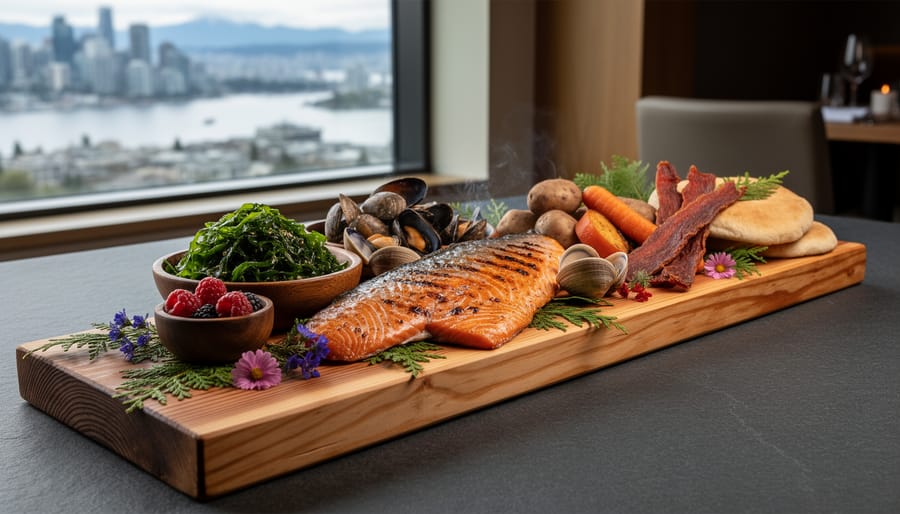
Long before European ships arrived in the 1790s, the Coast Salish peoples had developed sophisticated food systems rooted in the abundant waters and forests surrounding what would become Vancouver. Salmon formed the cornerstone of their diet and culture, prepared through methods perfected over millennia: cedar-planked over open fires, wind-dried into strips that lasted through winter, or slow-smoked in specially designed smokehouses. These weren’t just survival techniques. They were culinary arts that honoured the fish’s life while maximizing flavour and nutrition.
The Coast Salish foraged extensively across the landscape they knew intimately. Salal berries, huckleberries, and crabapples were gathered seasonally. Fiddleheads, stinging nettles, and wild onions added fresh greens to the diet. Camas bulbs were roasted in earth ovens, creating a sweet, caramelized flavour. Shellfish harvested from the shores provided protein year-round, while herring eggs collected on kelp fronds offered delicate seasonal treats.
“These ingredients and techniques aren’t historical artifacts, they’re living knowledge that connects us to this place and teaches us how to eat in harmony with the seasons.”
Today, Vancouver’s culinary scene is witnessing a resurgence of Indigenous food traditions. Restaurants like Salmon n’ Bannock serve cedar-braised salmon and game meats alongside bannock prepared using recipes passed down through generations. Contemporary Indigenous chefs are reclaiming and innovating with ancestral ingredients: juniper berries, wild mushrooms, seaweed varieties, and traditional smoking methods appear on menus throughout the city.
This isn’t fusion or appropriation. It’s the rightful continuation of Vancouver’s oldest culinary tradition, one that predates the city itself by thousands of years. When you taste bannock at a modern Indigenous restaurant or encounter wild salmon prepared using Coast Salish techniques, you’re experiencing flavours that have defined this region longer than any other culinary influence. Understanding this foundation changes how you see every meal in Vancouver, because this is where the city’s food story truly begins.
Gastown’s Grit: The Pioneer Era and Early Immigrant Kitchens
Chinatown’s Enduring Legacy
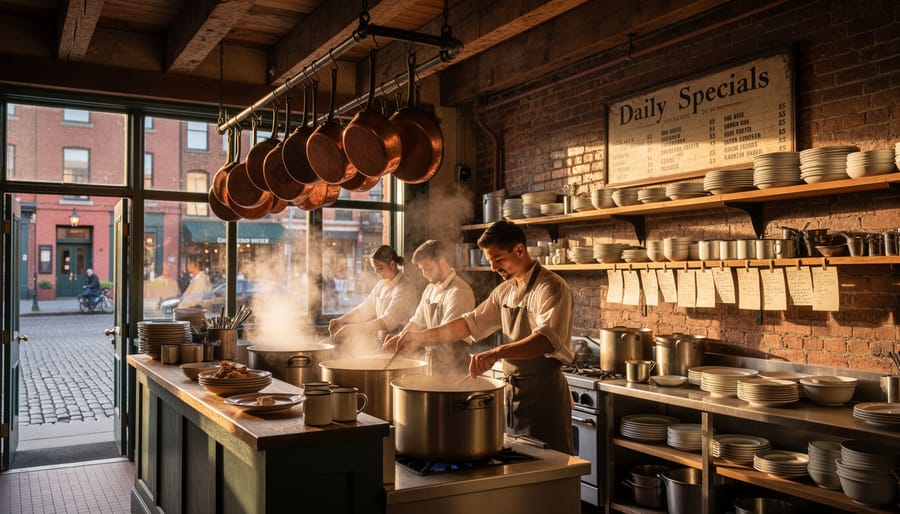
By the 1890s, Chinatown, Vancouver had taken root along Pender and Main Streets, driven by necessity rather than choice. Chinese railway workers and merchants excluded from living elsewhere created a self-sufficient community where food became both survival and cultural anchor. Grocers imported preserved ingredients from Canton, herbalists dispensed medicinal teas and soups, and small restaurants fed laborers craving flavors from home.
What started as necessity evolved into North America’s third-largest Chinatown. Through decades of discriminatory policies, the neighborhood’s food culture persisted. Shops established in the 1920s and 1930s passed through generations, maintaining traditional techniques for making lap cheong sausage, hand-pulling noodles, and slow-roasting barbecue meats over open flames. These weren’t museum pieces, they were working businesses feeding their community.
The neighborhood faced decline through the 1980s and 1990s as newer immigrants settled elsewhere, sparking an ongoing Chinatown vs Richmond conversation about where Vancouver’s Chinese culinary future lies. Yet Chinatown’s historic core retains something Richmond’s suburban sprawl can’t replicate: layers of time visible in century-old storefronts, hand-painted signs, and recipes refined through generations of the same family’s hands.
Today’s Chinatown blends preservation with adaptation. Third-generation dim sum parlors operate alongside modern cafes run by young chefs reinterpreting their grandparents’ recipes. The neighborhood remains a culinary archive where you can still buy ingredients and eat dishes prepared using methods that arrived with the railway workers 150 years ago.
The Great Migration Years: How Post-War Immigration Built Vancouver’s Food Mosaic
Little Italy on Commercial Drive
Italian immigrants began arriving on Commercial Drive in significant numbers during the 1950s, transforming what had been a working-class streetcar corridor into Vancouver’s answer to a Roman neighborhood. Families from Calabria, Abruzzo, and Sicily opened storefronts where they replicated the food traditions of their villages, small espresso bars where men gathered for cards and conversation, pasticcerias displaying intricate cannoli and sfogliatelle, and grocers stocking proper Parmigiano-Reggiano wheels and San Marzano tomatoes. These weren’t restaurants designed for tourists; they were extensions of Italian homes, places where the community maintained its identity through daily rituals of coffee, bread, and pasta.
By the 1970s, Commercial Drive had earned its “Little Italy” designation through sheer density of authentic operations. Family-run trattorias served regional specialties, Neapolitan pizza with proper leopard-spotted crusts, Bolognese ragù simmered for hours, house-made gnocchi on Thursdays, while bakeries turned out focaccia and ciabatta using techniques passed down through generations. The neighborhood’s European sensibility stood in stark contrast to the emerging Asian food corridors, particularly the sophisticated Chinese dining in Richmond that would transform Vancouver’s culinary landscape in later decades. Today, while gentrification has diluted some of the Drive’s Italian character, historic establishments still anchor the street, maintaining recipes and hospitality models unchanged since their founding families first opened their doors.
Powell Street and the Japanese Canadian Story
Before the Second World War, Powell Street hummed with Japanese-owned groceries, fish shops, and cafes serving miso soup, pickled vegetables, and fresh tofu. Vancouver’s Japanese Canadian community, settled here since the 1890s, had built a self-contained neighborhood where culinary traditions from coastal Japan found expression in British Columbia. Fishermen supplied local markets with salmon and herring. Families made tsukemono in cramped apartments. Small restaurants introduced white Vancouverites to their first taste of teriyaki and tempura.
Internment in 1942 shattered this community overnight. The federal government forcibly removed 22,000 Japanese Canadians from the coast, confiscated their properties, and dispersed them across the country. Powell Street’s restaurants closed. Recipes survived only in memory, carried to internment camps and prairie farms where families cooked with whatever ingredients they could find, preserving techniques until they could return.
The slow revival began in the 1970s when second- and third-generation Japanese Canadians, finally allowed back to the coast, started reclaiming their heritage. New restaurants opened, but the neighborhood never fully recovered its prewar density. Instead, Japanese food culture dispersed across Vancouver. Izakayas and ramen shops appeared citywide in the 1980s and 1990s, built by a generation determined to honor what their grandparents had lost. Today’s thriving Japanese dining scene, from Kitsilano sushi bars to downtown kaiseki restaurants, carries forward a culinary tradition nearly erased by history, a testament to resilience measured in recipes preserved and passed down through decades of displacement.
The Hong Kong Handover and the Elevation of Asian Cuisine
The decades surrounding Hong Kong’s 1997 handover to China reshaped Vancouver’s food landscape in ways that continue to define the city today. Wealthy Hong Kong families began arriving in the mid-1980s, bringing not just capital but culinary expectations forged in one of Asia’s most sophisticated dining cultures. These weren’t immigrants seeking survival through corner restaurants, they demanded the same elevated Cantonese cuisine they’d enjoyed in Hong Kong’s finest establishments, and they had the resources to create it.
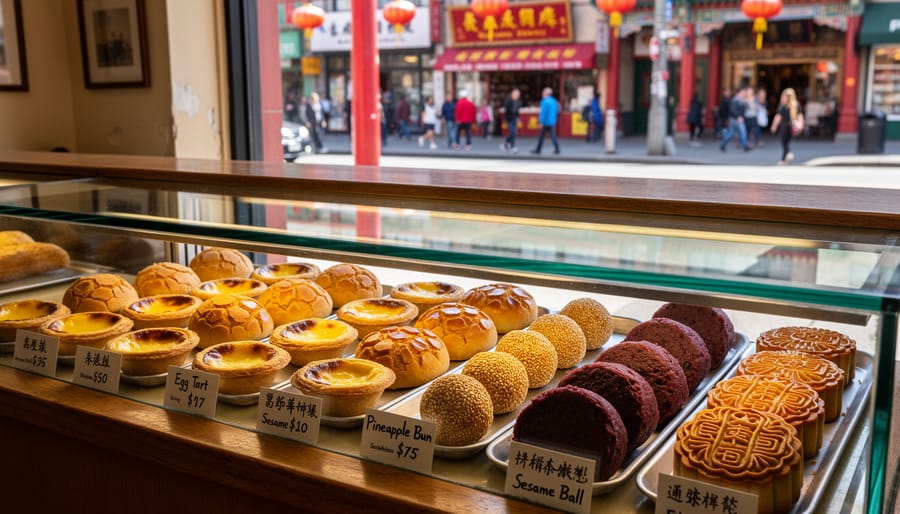
Richmond became the epicenter of this transformation. The suburb south of Vancouver filled with shopping malls housing restaurants that rivaled anything in Hong Kong: sparkling dining rooms with tank-fresh seafood, dim sum carts bearing handmade har gow, and menus running to dozens of pages. The Richmond Chinese food scene established new benchmarks for authenticity and quality that older Chinatown establishments couldn’t match without similar investment. Night markets appeared. Bakeries churned out egg tarts with flaky Portuguese-style pastry. Restaurants specialized in single regional styles, Taiwanese beef noodle soup, Shanghainese xiaolongbao, Sichuan hot pot, rather than the generalized “Chinese food” Vancouverites knew before.
This wave of immigration transformed several key areas:
- Richmond’s No. 3 Road corridor, which became Vancouver’s new Asian food capital
- Burnaby’s Kingsway district, where Hong Kong-style cafes and seafood restaurants proliferated
- Vancouver’s Kerrisdale and Marpole neighborhoods, which saw an influx of high-end Asian dining
The standards these restaurants set rippled across the region. Vancouverites who’d never traveled to Asia developed educated palates for regional Chinese cuisines. Japanese restaurants raised their game to compete. Korean, Thai, and Vietnamese establishments benefited from this Asian cuisine evolution as diners grew more adventurous and demanding. The city’s culinary bar shifted permanently upward, creating expectations for ingredient quality, preparation technique, and authenticity that now extend beyond Asian restaurants to shape Vancouver’s entire food culture. What began as one community recreating home became the foundation for Vancouver’s reputation as North America’s premier destination for Asian dining.
Farm to Table Roots: Vancouver’s Agricultural Heritage
Vancouver’s culinary identity has always been inseparable from the rich farmland and waters surrounding it. Long before “farm to table” became a buzzword, the city’s kitchens depended entirely on what the Fraser Valley’s black soil, the Salish Sea, and nearby orchards could provide.
The Fraser Valley, stretching east from Vancouver, became British Columbia’s agricultural heartland in the late 1800s. Early settlers cleared dense forest to plant berry farms, dairy operations, and vegetable plots. By the 1920s, the valley was feeding the growing city with strawberries, raspberries, and dairy products transported by rail and ferry. These weren’t specialty ingredients but everyday staples that defined what Vancouverites ate.
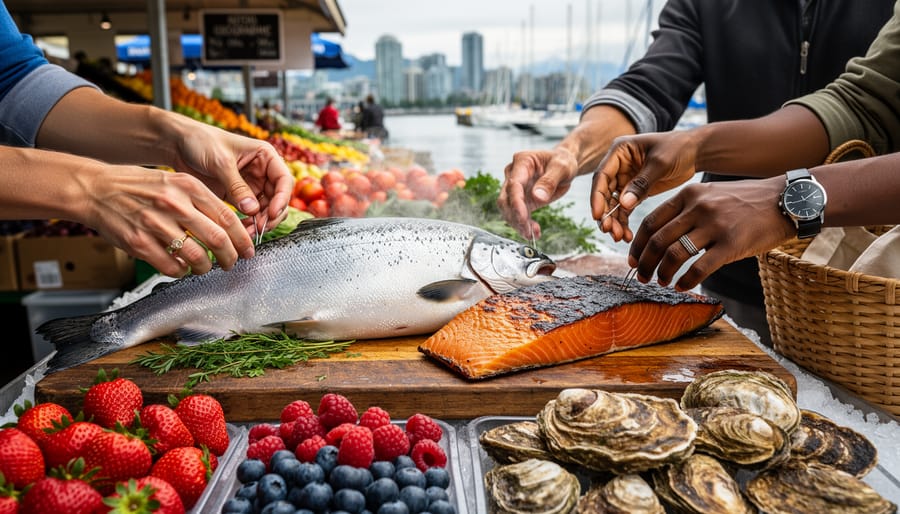
Fishing shaped the city’s food culture even more profoundly. Canneries lined the Fraser River and False Creek, processing millions of salmon annually. Japanese, First Nations, and European fishermen supplied both local markets and export operations. Fresh halibut, herring, and shellfish arrived daily at waterfront stalls, making seafood a cornerstone of working-class diets, not a luxury.
The mid-20th century brought industrial agriculture and centralized food distribution. Supermarkets replaced public markets, and seasonal eating gave way to year-round imports. Fraser Valley farmland disappeared under housing developments as the city sprawled eastward.
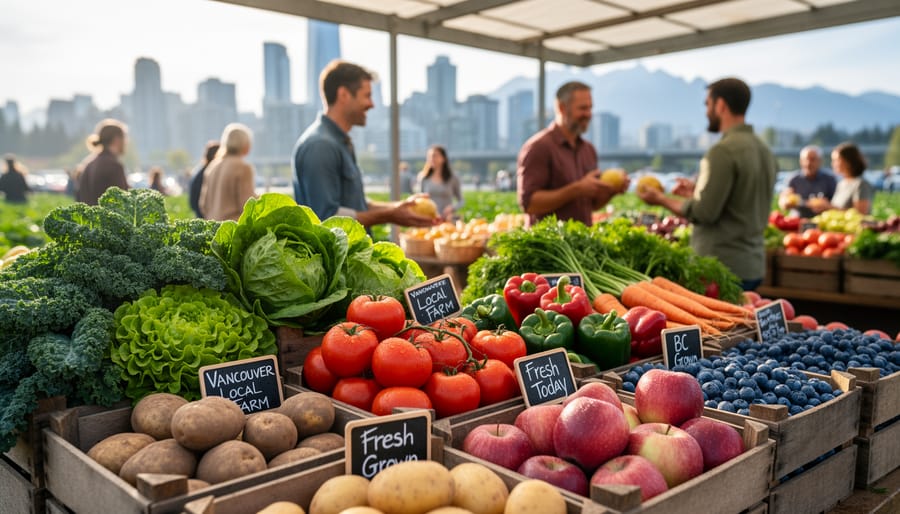
The turn back toward local ingredients began quietly in the 1980s. Farmers markets returned to neighborhoods. Chefs started sourcing directly from valley farms, rediscovering heirloom vegetables and heritage livestock breeds. What started as a niche movement became mainstream by the 2000s, as Vancouverites reconnected with the agricultural traditions that had fed the city for generations. Today’s celebration of regional ingredients isn’t innovation but rediscovery of Vancouver’s original food system.
Where History Meets Your Plate: Experiencing Vancouver’s Culinary Heritage Today
Walking through Vancouver’s neighborhoods today means stepping into chapters of living history, places where century-old recipes still simmer, immigrant dreams turned into family businesses, and traditional techniques shape what arrives on your plate. These aren’t museum exhibits; they’re working kitchens and bustling markets where the past remains deliciously present.
Start in Chinatown, where herbalists still blend medicinal teas using formulas brought over in the 1880s, and family-run dim sum parlors serve har gow exactly as their great-grandparents did. Stop by New Town Bakery for BBQ pork buns baked using recipes unchanged since 1968, or watch elderly aunties select live seafood at Wing Sang Building’s ground-floor markets, the same building that housed Vancouver’s first Chinese immigrants. But Chinatown tells only part of Vancouver’s Asian story. To taste how Hong Kong immigration transformed Vancouver’s culinary standards, visit Richmond for Chinese food and experience the suburban dynasty-level sophistication that defined the 1990s wave.
Commercial Drive remains the heart of Vancouver’s Italian heritage, though you’ll have to look past newer cafes to find the authentic holdouts. Fratelli Bakery still makes biscotti using their Calabrian grandmother’s recipe from 1960, and older trattorias serve pasta exactly as they did when Italian longshoremen filled their tables. The neighborhood’s Portuguese legacy lives on in custard tarts and grilled sardines at establishments run by third-generation owners.
Powell Street’s Japanese Canadian story requires more intentional seeking, internment scattered that community, but thoughtful restaurants now honor those roots. Look for chefs working with koji fermentation, making tsukemono pickles, or crafting mochi the patient, traditional way rather than taking industrial shortcuts.
Fraser Valley farm stands and Vancouver’s farmers markets let you touch the agricultural heritage that once fed logging camps and cannery workers. Meet farmers whose families worked this land for four generations, cheese makers reviving European traditions with BC milk, and fishmongers selling salmon species Coast Salish peoples harvested for millennia.
Historic pubs like The Lamplighter or The Waldorf keep Depression-era recipes alive. Craft breweries honor Vancouver’s working-class tavern culture while elevating it. Even food trucks echo Gastown’s mobile oyster carts from the 1880s, just with better permits and Korean-Mexican fusion instead of raw bivalves.
This isn’t about chasing Instagram moments. It’s about recognizing that Vancouver’s history isn’t confined to plaques and archives, it’s alive in wood-fired ovens, fermenting crocks, and the callused hands still rolling dough at 4 a.m. Every neighborhood carries its immigration story forward through food, and every meal becomes richer when you know whose journey brought it here.
Every bowl of noodles, every slice of bannock, every dim sum cart tells a story in Vancouver. When you understand the city’s history, the Coast Salish fishers who first harvested these waters, the Chinese railway workers who built Chinatown, the waves of post-war immigrants who transformed quiet streets into vibrant food districts, you’re not just reading about the past. You’re tasting it.
Vancouver’s culinary heritage isn’t frozen in time. It’s alive in the third-generation baker still using his grandmother’s Italian recipe on Commercial Drive, in the Indigenous chef reclaiming traditional smoking techniques, in the Richmond restaurant serving Hong Kong dishes that traveled across an ocean. The food continues evolving as new communities arrive and add their flavors to the mosaic.
This living tradition means every meal becomes richer when you know its roots. That Japanese izakaya? It carries the resilience of a community that rebuilt itself. Those farm-fresh vegetables? They connect you to the Fraser Valley’s agricultural legacy. The fusion dish blending Asian and Pacific Northwest ingredients? It represents Vancouver’s ongoing story of cultural exchange.
Walk through these neighborhoods. Talk to the artisans. Taste the history. Vancouver’s food landscape offers something no guidebook can fully capture: the chance to experience how centuries of migration, tradition, and innovation come together on a single plate.
Leave a Reply