
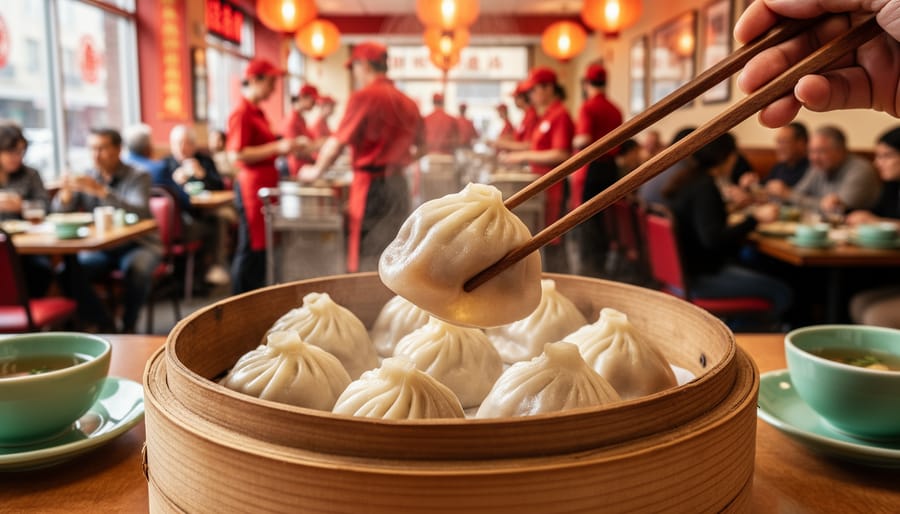
Step off the plane at Vancouver International Airport and within minutes, you’re already in the heart of Richmond’s extraordinary Chinese food scene. This suburban city, where over 70% of residents claim Asian heritage, has quietly transformed into North America’s most authentic Chinese culinary destination outside of Asia itself. Unlike the adapted, westernized versions found in most Chinatowns, Richmond’s dining landscape mirrors the regional diversity of China with startling accuracy—from hand-pulled Lanzhou noodles stretching across marble counters to Cantonese dim sum carts navigating crowded dining rooms at 10 AM on a Tuesday.
The secret lies in Richmond’s unique position as a true gateway community. When Hong Kong families immigrated to Canada in waves during the 1980s and 1990s, they didn’t just bring recipes—they brought master chefs, traditional cooking equipment, and an uncompromising dedication to authenticity. Today, grandmothers from Guangzhou shop alongside recent arrivals from Sichuan at Aberdeen Centre’s bustling food court, while restaurant owners source specialty ingredients that simply don’t exist elsewhere in North America.
What makes Richmond exceptional isn’t just the food’s authenticity—it’s the lived-in feeling of these neighborhoods. Alexandra Road’s soup dumpling specialists operate with the same casual confidence as their Shanghai counterparts. The night market vendors at Bridgeport Station serve skewers with techniques passed down through generations. Whether you’re a first-time visitor or a local who’s somehow missed this culinary goldmine hiding in plain sight, Richmond demands exploration. The best part? You don’t need a passport, just curiosity and an appetite for the real thing.
The Golden Village: Alexandra Road’s Dumpling Dynasty
Walking along Alexandra Road feels like stepping into a living cookbook, where the ancient art of dumpling-making unfolds before your eyes in steamy tableaux behind countless restaurant windows. This unassuming stretch has earned its nickname as Richmond’s Golden Village, where the rhythmic thwack of dough meeting counter and the billowing clouds of steam from bamboo stackers create a symphony that speaks to something primal in every food lover’s soul.
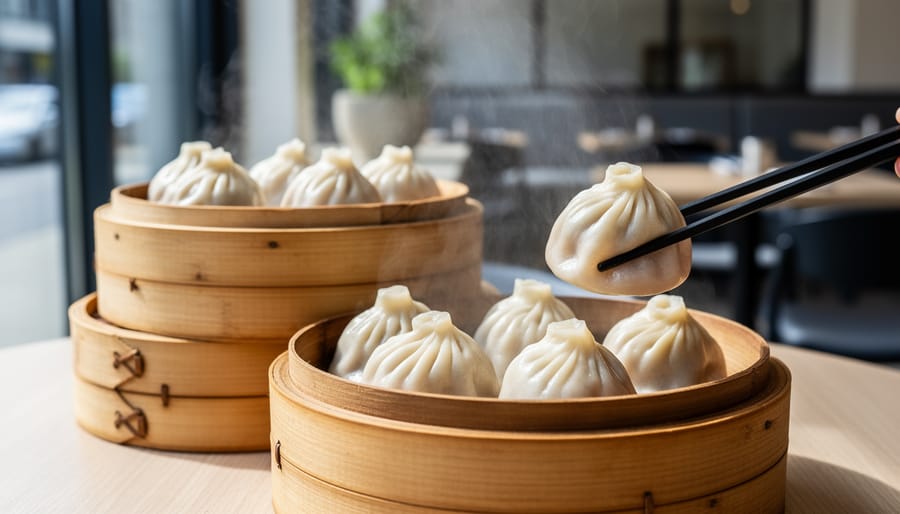
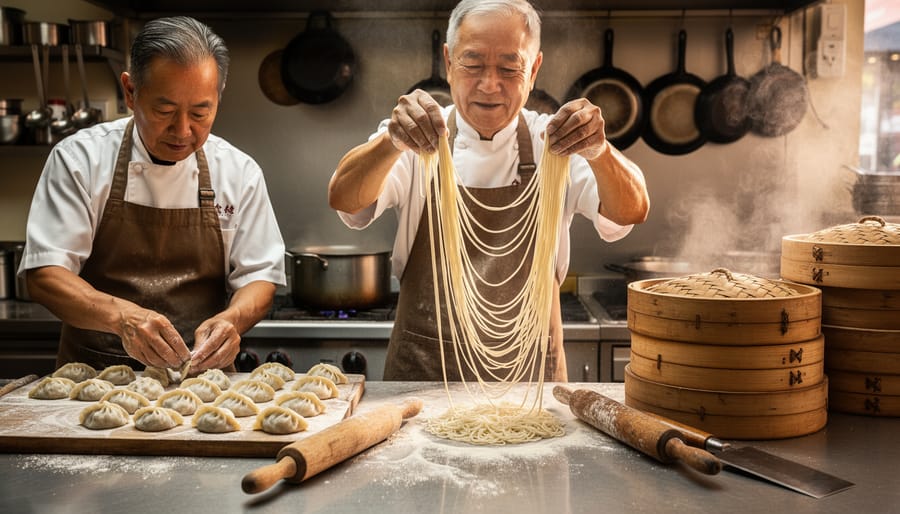
The corridor awakens each morning with the patient hands of dumpling artisans who’ve been perfecting their craft since before many of Richmond’s high-rises touched the sky. At Shanghai River Restaurant, third-generation dumpling maker Mrs. Chen arrives before dawn, her fingers moving with practiced precision as she pleats xiaolongbao—soup dumplings so delicate that the broth inside trembles with each breath of passing air. Through the front window, you can watch her work, each dumpling receiving exactly eighteen pleats, a standard she refuses to compromise despite the demanding pace of service.
Further down Alexandra, the windows of Northern Delicacy frame another mesmerizing performance: hand-pulled noodles stretching and snapping in the capable hands of Master Liu, who learned his technique in Lanzhou four decades ago. The dough begins as a single mass, then multiplies through a dancer’s sequence of pulls, folds, and rhythmic slaps until hundreds of perfectly uniform strands emerge. During lunch service, a small crowd often gathers outside, smartphones raised, captivating by this edible magic trick.
The neighborhood’s character reveals itself not just in technical mastery but in the generational knowledge passed down through family lines. At Tasty Congee & Noodle Wantun Shop, grandmother recipes govern every pot of broth simmering for twelve hours, creating the foundation for wontons that have kept families returning for two decades. The walls here tell stories through faded photographs of the original Guangzhou location, connecting Richmond’s present to culinary traditions that stretch back centuries.
This is where Richmond’s dumpling dynasty thrives—not in polished concepts or fusion experiments, but in the patient dedication of artisans who measure their success one perfect pleat at a time.
Aberdeen Centre and the Mall Food Revolution
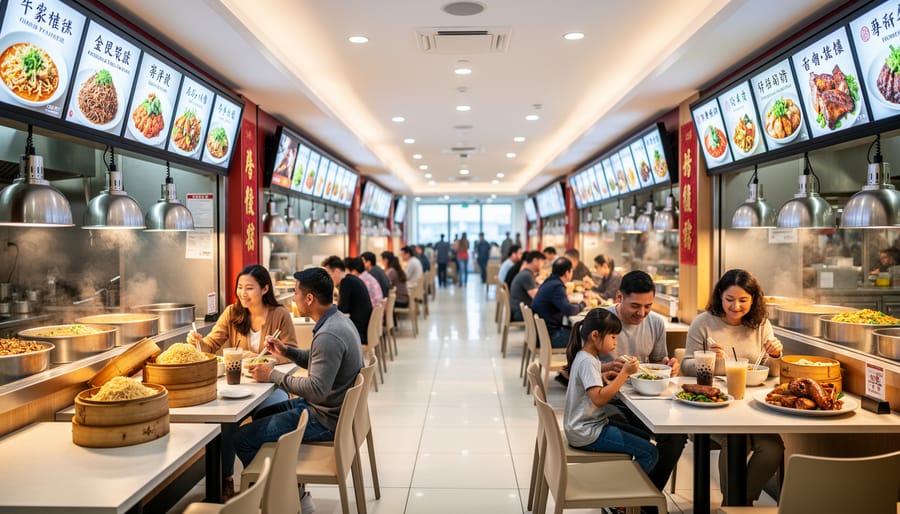
Step inside Aberdeen Centre or Yaohan Centre on any given afternoon, and you’ll witness something remarkable: food courts that have evolved far beyond their North American reputation as quick-stop convenience zones. Here, amid the hum of animated Cantonese conversations and the aromatic pull of sizzling woks, Richmond’s Asian shopping malls have reimagined casual dining as a legitimate culinary destination.
The transformation is most evident at Aberdeen Centre, where the lower level unfolds like a vibrant night market that never sleeps. Stalls showcase regional specialties with the same dedication you’d expect from standalone restaurants. The Taiwanese breakfast vendors start their day before dawn, hand-pulling noodles and ladling steaming soy milk into bowls for early risers who know that the freshest you tiao (Chinese crullers) disappear by mid-morning. Nearby, Hong Kong-style cafés plate up breakfast sets where perfectly runny scrambled eggs drape over buttered toast, paired with silky milk tea that locals swear rivals anything found on the streets of Kowloon.
What makes these mall food courts extraordinary isn’t just the food itself, but the community tapestry they weave. Grandparents gather over dim sum baskets, sharing gossip in Cantonese while their grandchildren tackle bubble tea and egg waffles at the next table. Young professionals huddle over laptops between meetings, fueled by aromatic bowls of beef noodle soup. Weekend afternoons see families claiming their favorite tables for hours, treating the food court as an extended living room where the menu spans entire regions of China.
The social atmosphere pulses with an authenticity that casual dining chains can’t replicate. Vendors know their regulars by name and usual order. First-time visitors watch neighboring tables for ordering cues, often striking up conversations that lead to recommendations scrawled on napkins. The fluorescent-lit spaces buzz with the energy of genuine community hubs, where newcomers to Canada recreate the communal dining traditions of home, and curious food lovers discover that some of Richmond’s most memorable meals come served on plastic trays. This is where mall dining sheds its fast-food stigma and becomes something beautifully, deliciously different.
The Night Market Experience: Summer’s Sizzling Street Food
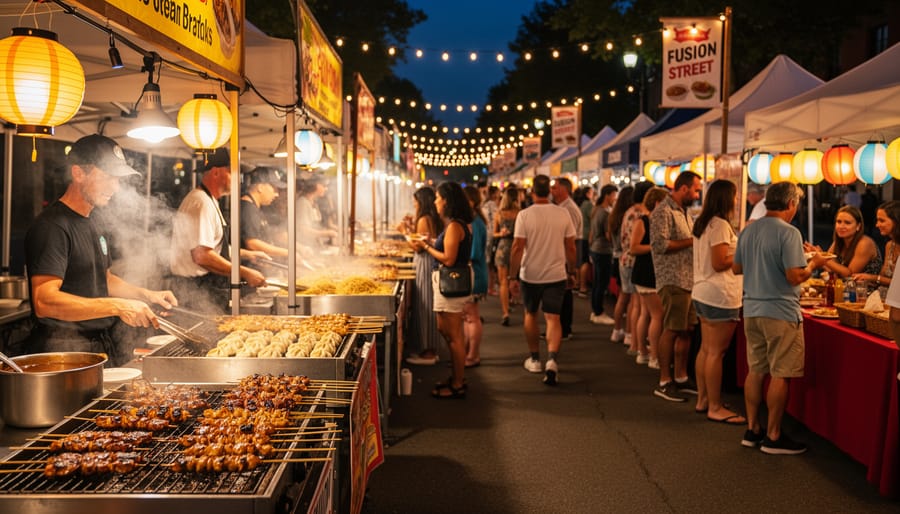
As dusk settles over Richmond each summer weekend, the air transforms into an intoxicating tapestry of aromas that pulls you toward an electric celebration of food and culture. The Richmond Night Market, attracting more than one million visitors annually, represents North America’s largest night market and a living, breathing testament to Richmond’s vibrant Asian heritage.
Step through the entrance and your senses immediately awaken. The crackling symphony of hundreds of vendors grilling, frying, and steaming creates an energetic soundtrack punctuated by laughter and multilingual conversations. Smoke rises from charcoal grills where lamb skewers glisten with cumin and chili oil, their charred edges promising that perfect balance of crispy and tender. Nearby, golden-brown takoyaki balls dance in their special pans, while the unmistakable pungent aroma of stinky tofu draws both the adventurous and the curious.
This isn’t merely about eating; it’s about community gathering under strings of colorful lights, families bridging generations through shared culinary memories, and newcomers experiencing flavors that transport them across continents. Watch grandmothers teaching granddaughters how to properly eat soup dumplings, or friends debating which bubble tea vendor creates the most satisfying pearl texture.
The innovation here thrills. Vendors experiment fearlessly, offering rainbow-hued dragon’s breath dessert that releases dramatic nitrogen vapor, cheese-filled Korean corn dogs rolled in crispy potato, and Hong Kong-style egg waffles wrapped around ice cream in flavors like black sesame and taro.
Beyond the food stalls, the night market pulses with energy. Live performances showcase traditional dance and modern pop fusion, while craft vendors display handmade treasures. Young couples snap photos against neon backdrops, children chase each other between stalls, and everyone becomes part of this temporary community united by curiosity and appetite.
The Richmond Night Market captures something essential: food as celebration, tradition, and joyful experimentation all sizzling together under the summer sky.
Regional Chinese Cuisines: Beyond Cantonese Classics
Step into Richmond’s dining landscape, and you’ll discover something remarkable: the ability to traverse China’s vast culinary geography without ever boarding a plane. While Cantonese cuisine may have established the foundation, it’s the kaleidoscope of regional Chinese cooking that truly sets Richmond apart as North America’s most comprehensive Chinese food destination. This extraordinary diversity exists because 54.3% of Richmond’s population identifies as Chinese, representing immigrants from nearly every province who’ve brought their home-region recipes and cooking techniques with them.
Walk along Alexandra Road or through Aberdeen Centre’s bustling food court, and the aromatic signals shift dramatically from block to block. The numbing tingle of Sichuan peppercorns mingles with the rich, savory perfume of Shanghainese red-braised pork. These aren’t fusion experiments or adapted versions—they’re the authentic preparations that families have refined over generations, now recreated thousands of miles from their origins.
- Sichuan Cuisine
- Famous for its bold use of chili peppers and tongue-numbing Sichuan peppercorns, creating the signature mala (numbing-spicy) sensation. Signature dishes include fiery hot pot broths, dan dan noodles, and mapo tofu that dance between heat and fragrance.
- Shanghainese Cuisine
- Characterized by delicate flavors, precise steaming techniques, and the beloved xiaolongbao (soup dumplings) that explode with savory broth. The cuisine emphasizes sweetness balanced with subtle soy-based sauces and showcases exceptional seafood preparations.
- Northern Chinese Cuisine
- Hearty wheat-based dishes define this region, including hand-pulled noodles, lamb skewers seasoned with cumin and chili, and pillowy steamed buns. The flavors are robust and warming, reflecting the colder climate of provinces like Shaanxi and Inner Mongolia.
- Hunan Cuisine
- Distinguished by pure, fresh chili heat without the numbing quality of Sichuan cooking, combined with intense sourness and smoky flavors. Dishes like steamed fish heads with chopped chili and twice-cooked pork showcase bold, unapologetic seasoning.
The beauty of Richmond’s regional diversity lies in its authenticity born from necessity and nostalgia. These restaurants emerged because immigrants craved the specific flavors of home—the precise fold of a Shanghainese dumpling wrapper, the exact ratio of spices in a Xinjiang lamb pilaf, the comforting warmth of a Northeastern Chinese stew. What started as homesick cooks feeding their communities has evolved into an unparalleled resource for anyone seeking genuine regional Chinese cuisine.
You’ll find grandmothers hand-pulling noodles in open kitchens, chefs tending to bubbling hot pot broths that simmer for hours, and dumpling masters whose nimble fingers create hundreds of perfect pleats daily. This isn’t food for tourists—it’s cooking for a knowledgeable, demanding audience who recognize when the flavors taste like home.
The Artisans Behind the Woks: Stories from Richmond’s Kitchens
Behind every steaming basket of xiao long bao and hand-pulled noodle strand lies a story of dedication, heritage, and countless hours of practice. The kitchens of Richmond pulse with the energy of artisans who’ve spent years, sometimes decades, perfecting their crafts.
At dawn, Master Liu arrives at his Aberdeen Centre restaurant, flour dusting his apron before the first customer walks through the door. He learned the art of noodle pulling from his grandfather in Lanzhou, watching weathered hands transform simple dough into gossamer strands. “People think it’s just flour and water,” he says, his hands working rhythmically, “but every stretch carries memory.” After immigrating to Richmond fifteen years ago, he brought those memories with him, teaching his daughter the same techniques that span four generations.
In a kitchen on Alexandra Road, Mrs. Chen orchestrates a team of dumpling folders whose fingers move with balletic precision. Each wrapper receives exactly the right amount of filling, each pleat perfectly spaced. She started folding dumplings at age seven in her mother’s Shanghai restaurant, and now her own granddaughter works beside her on weekends, learning the family’s signature twenty-pleat technique. The rhythm of their work creates its own music—the soft pat of dough, the gentle sizzle as potstickers hit hot oil.
The younger generation brings innovation while honoring tradition. Chef Kevin Wong, who trained in Hong Kong before settling in Richmond, experiments with local British Columbia ingredients while maintaining classical Cantonese techniques. His menu features spot prawns prepared using methods his mentor taught him twenty years ago, bridging continents and generations on a single plate.
These artisans rarely seek recognition, finding satisfaction in the quiet mastery of their work. Yet their dedication transforms everyday meals into connections with culture, family, and homeland. When you taste that perfectly crisp scallion pancake or silky dan dan noodles, you’re experiencing the culmination of lifetimes spent perfecting a craft—hands that remember, hearts that honor tradition, and spirits that welcome you into their culinary story with every bite.
Navigating Richmond Like a Local: Your Culinary Road Map
Your Richmond culinary adventure begins with a simple decision: surrender to the experience. This isn’t downtown Vancouver with its carefully curated Instagram-worthy spaces. Richmond’s Chinese food scene thrives in sprawling plazas, bustling food courts, and unassuming restaurants where the focus remains squarely on what’s simmering in the kitchen rather than what’s hanging on the walls.
The Canada Line becomes your portal between worlds, whisking you from downtown Vancouver to Richmond’s culinary heartland in just 25 minutes. Alexandra Road station drops you into the vibrant pulse of Golden Village, while Richmond-Brighouse station positions you perfectly for exploring the restaurants radiating around Aberdeen Centre and Yaohan Centre. Weekend warriors should embrace public transit—parking lots overflow with families gathering for dim sum, and navigating the maze of vehicles becomes an art form requiring patience and strategic timing.
Here’s your blueprint for an unforgettable exploration:
- Start by browsing online menus and food blogs the week before, noting unfamiliar dishes that spark curiosity rather than building a rigid itinerary.
- Arrive hungry but strategic—plan for multiple stops by ordering smaller portions at each location, transforming your day into a progressive feast.
- Begin with dim sum between 10am and noon when steamer baskets flow fresh from the kitchen and tables hum with multigenerational conversations.
- Take a midday break to explore nearby Asian supermarkets, observing ingredients that might appear in your afternoon discoveries.
- Return for an early dinner at a regional specialist—perhaps Shanghainese soup dumplings or Sichuan hot pot—when evening service launches with renewed energy.
The neighborhoods speak different culinary dialects. Alexandra Road pulses with Hong Kong-style establishments, their windows steamed with the breath of countless dumplings. The blocks surrounding Aberdeen Centre lean into contemporary Taiwanese influences, while the Golden Village strip celebrates regional Chinese diversity under one sprawling roof.
Language barriers dissolve through universal gestures and curiosity. Point at neighboring tables when something captivates your attention. Many establishments feature picture menus, and staff members genuinely appreciate diners willing to venture beyond predictable choices. That gelatinous cube? Perhaps it’s silken tofu bathed in chili oil. The mysterious dark broth? Could be the herbal chicken soup that locals swear by.
Embrace communal dining culture by ordering family-style dishes meant for sharing, rotating lazy Susans with practiced ease, and understanding that meals here unfold as social rituals rather than rushed transactions.
Richmond stands apart as an undeniable pillar of Chinese culinary excellence in the Vancouver region, where authenticity isn’t a marketing term but a living, breathing reality shaped by generations of community connection. This isn’t simply about finding a good meal—it’s about stepping into spaces where grandmothers debate the proper texture of har gow, where business deals unfold over lazy Susan lunches, and where the rhythm of daily life pulses through packed dining rooms and steaming kitchen windows.
The true magic of Richmond’s Chinese food scene reveals itself when you venture beyond the familiar, when you follow the aroma of five-spice wafting from a humble takeout counter or trust the handwritten specials board scrawled in characters you might not recognize. These moments of discovery, of tasting something that transports you across oceans, remind us why food remains our most powerful cultural bridge.
Whether you’re drawn to the bustling energy of Richmond’s dim sum palaces, the late-night comfort of congee specialists, or the regional specificity of hand-pulled noodle shops, each visit offers an opportunity to connect with a vibrant community that has shaped Vancouver’s identity as a global food destination.
So venture forth with curiosity and appetite. Talk to the servers, ask questions, order the unfamiliar dish. Richmond’s Chinese food culture welcomes those willing to embrace authentic experiences, promising rewards far richer than any tourist trail could offer. Your culinary journey awaits.
Leave a Reply